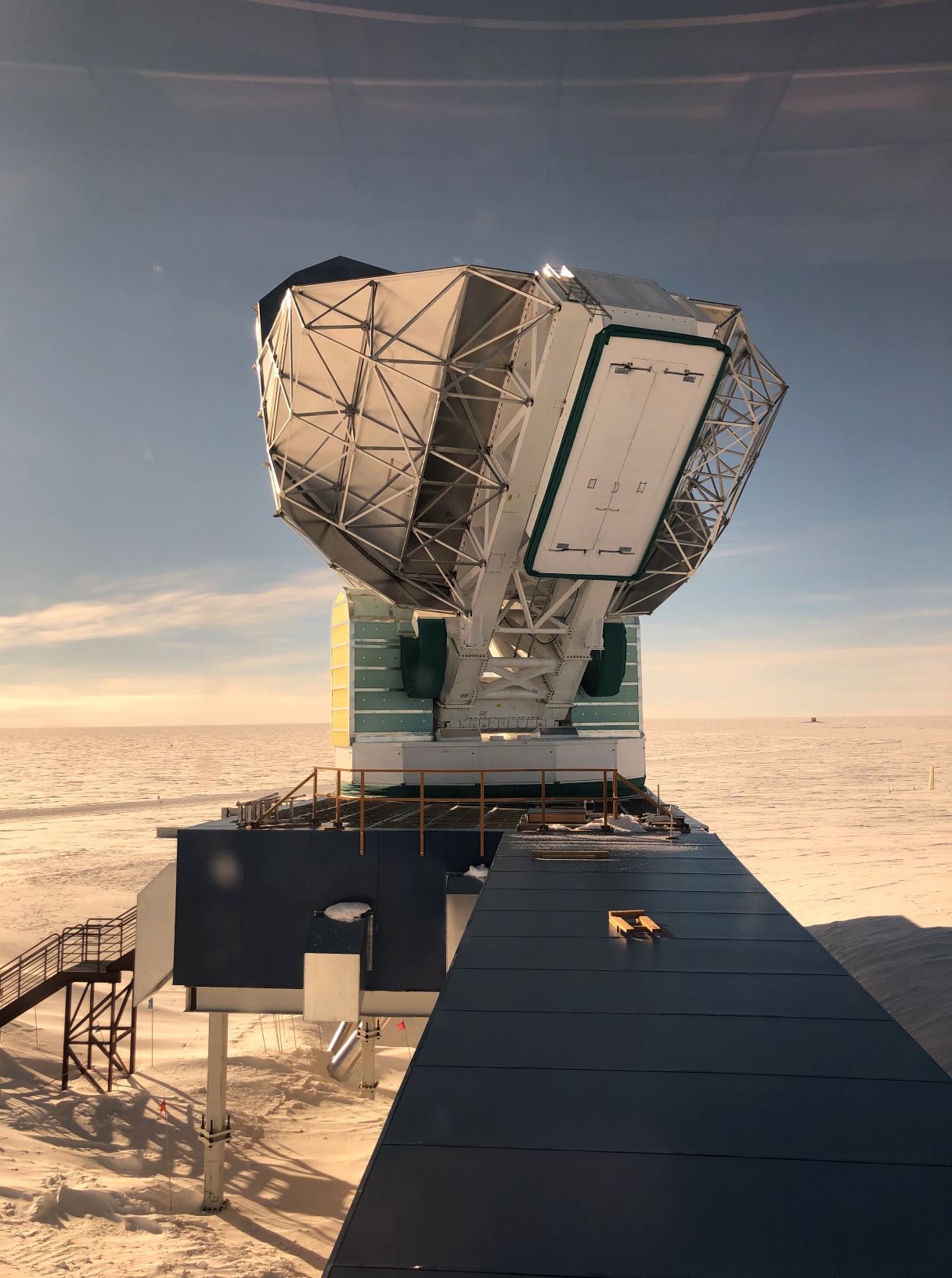
Weather: Beautiful sunny day! Very little wind; slightly bizarre how still it was today. Some high, wispy clouds at times.
Temperatures: Warm, around -10F .
Today I learned what to check during daily rounds. Each day one of the winter overs will have to go out to the Dark Sector Lab (DSL), where SPT is located, and perform rounds. These include basic checks that the heat is on, and that the glycol heating/cooling system is operating as expected. Similarly we have to do preventative maintenance on the telescope, such as greasing gears and bearings, clearing snow, and keeping the electronics happy.
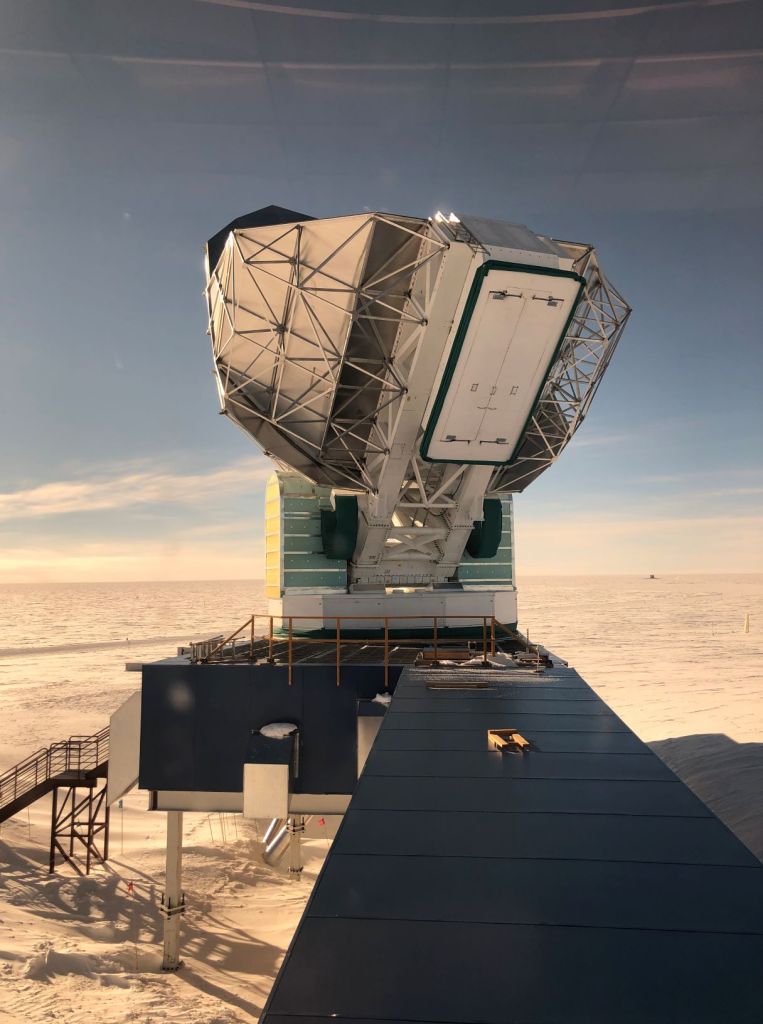
Another important piece of preventative maintenance is just getting used to nominal operations, sights, sounds and typical actions that occur. For example, the electronics and cryogenics for the receiver have to get from the control room up into the receiver cabin, and have to be able to rotate with the telescope as we move around and observe. These cables, wires and tubes are wound up in what is called an “Az Wrap” (short for azimuth wrap, since this device wraps up the cabling as the telescope rotates in Azimuth), and then sent up through the rotating roof into the green cable sleeves which allow for slack when moving in elevation. We need to check that these cables are all in good shape with proper abrasion relief.

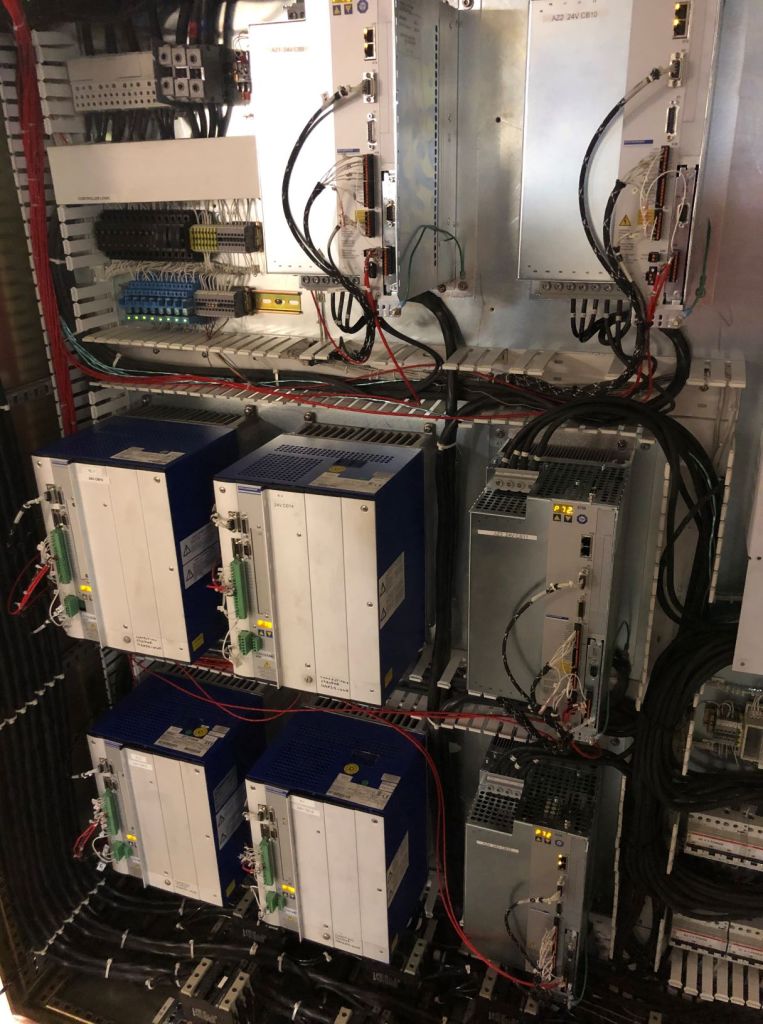
Similarly, the telescope drive system is located in the control room below the telescope, and we need to monitor those systems for signs of distress. For example, last year one of the drive amplifiers had a bit of a melt-down and they had to replace one. So I’ve been all learned-up on how to replace drive amplifiers, and how to drive the telescope on single-motor operation if need be. The telescope actually has 8 motors; 4 for Azimuth, and 4 for Elevation. The reason being that on each side, there is a set of two motors which are nominally driven with a slight torque against one another. This prevents backlash in the gears when changing direction (backlash occurs in gears because there is some space between gear teeth, and if you’re driving in one direction you push against one side of the gear tooth, but when you change direction there is a bit of space in between the next tooth).
One final thing we had to do was to recharge the helium compressor for the optics section of our receiver. Since we observe faint microwave signals from the 2.7K background, our detectors need to be extremely cold. Similarly, anything that is warm will emit microwave radiation in the frequency range we measure. Therefore, we need to cool our lenses and filters down as much as feasible. Since our camera is so large, we use two refrigerators to cool it down, one for the optics (lenses, filters, etc) and one for the detectors (and cold readout electronics, etc.).
These refrigerators work by some thermodynamic magic and use high pressure helium to do it. I wont pretend to understand how they work, nor to bore you with the details, but basically these fridges run optimally when they contain compressed helium at 320psi. Last winter, a known leak in the optics compressor meant that they had to recharge the compressor back to 320psi weekly. As the helium leaked out, and the pressure went down, the performance of the fridge suffered. The leak was found this past week, so we needed to recharge the helium back up to nominal 320psi so we could look for stability and hopefully get our fridge nice and cold.


Very exciting stuff!
I also learned about greasing. Looks like weekly and biweekly greasing will need to take place… I will be sure to get some pictures of that!
After the morning of doing rounds, and preventative maintenance checks, we decided to go back out to the berms to check out some SPT cargo boxes which had apparently broken open. So I got to zip around on a snowmobile again which was fun. It was so warm and so not windy that we ended up getting super hot while moving crates, and cleaning up the mess of steel plates, Teflon pads and other random hardware bits and pieces. I was out there in only a light puffer jacket and sunglasses and stayed relatively warm.
After that, I decided to go for a little run and bring my faux-pro (lol- I’m so clever…it’s an off-brand go pro)… I tried to give a little tour of the Dark Sector, but I need to find a way to reduce the video jitter since I’m running… otherwise you’ll never be able to watch it.
Cheers!
 Allen's South Pole Winter-Over 2020 (+)