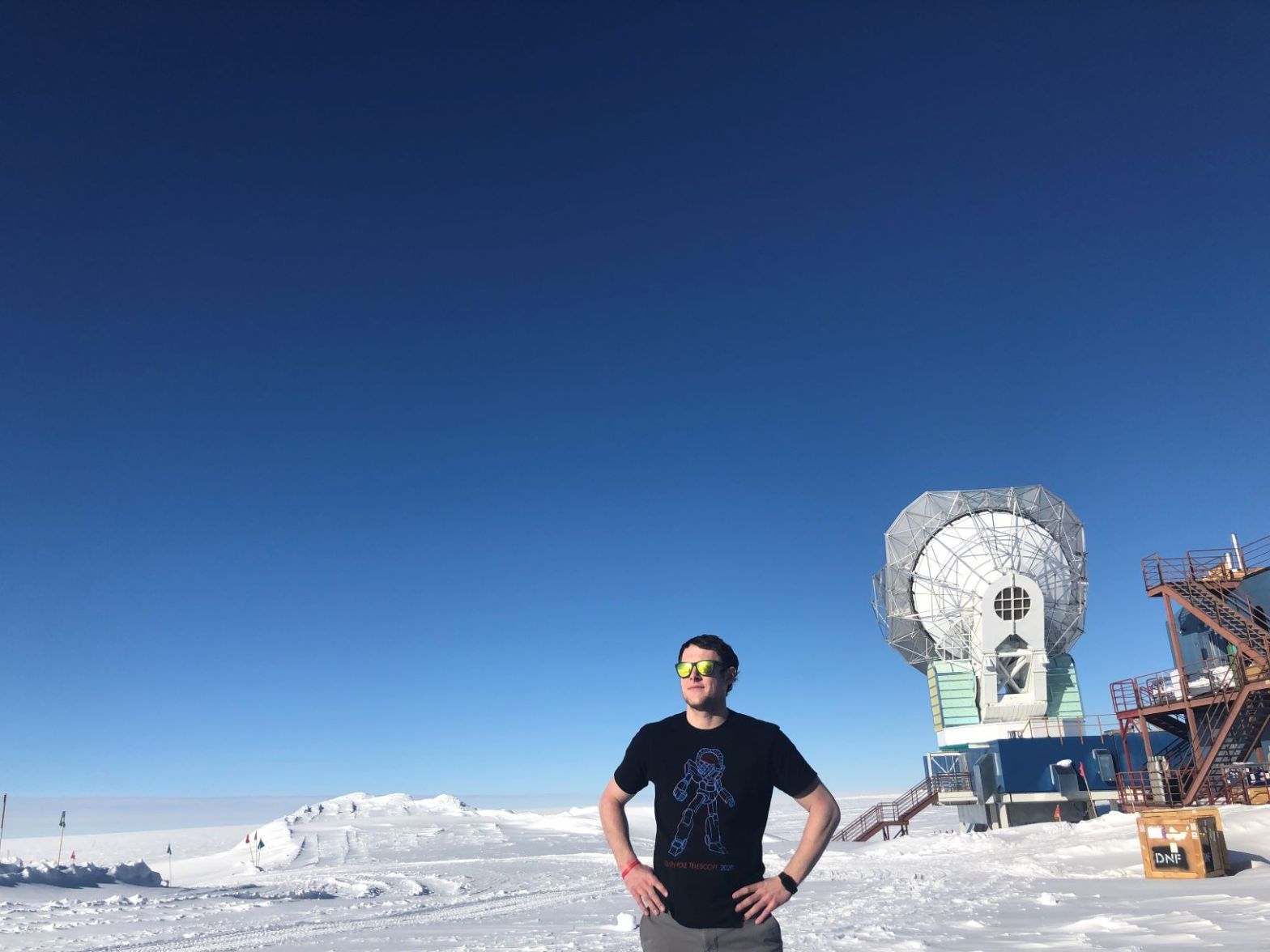
Weather: Warm, the day started overcast, but became a beautiful sunny afternoon. Temps around -12F with a slight breeze.

Today I got my first little taste of operation complication. We have a lot of electronic pagers set up to automatically check that things are operating as expected. If some measured value goes out of a certain range, or some piece of equipment is not communicating with the computer system, we get paged on our radios (and emailed, and called in our rooms… etc). This effectively helps us constantly monitor the telescope operations without having to sit in front of the computer screen or in the control room all day.
This morning, as our fridge cycle was finishing up, and our scheduler was about to begin an observation, we got a page. The pager system doesn’t currently relay any message; it just calls you, so we ran into the science lab and checked the pager log. “DAQ not running”. This was my first opportunity to problem solve! DAQ not running means that the data acquisition software wasn’t running (or that it couldn’t communicate with the readout electronics). It was easy enough to find out that there wasn’t a DAQ process running, and that all of the readout electronics were ping-able, so it was clear that something weird happened which caused the DAQ script to die before it even got started. The fix was simply rerunning the DAQ script. Woo! First crisis averted.
After the fun learning experience, I began going over fridge cycles with Brad. Our detectors are cooled to a fraction of a degree above absolute zero, and in order to do that, we have a fancy fridge which uses He4 and He3; boiling and condensing He as a way to extract energy. This fridge needs to be ‘cycled’ in order to get back into the state where it can use it’s thermodynamic magic to cool the detectors down to .3K.

After discussing fridge cycles for a while, we went out to DSL and I performed the daily rounds. I promptly discovered that the boiler was not running, and that there was a low-fuel alarm light on. After calling the facilities folks, and switching to the electric boiler (apparently there was a fuel pump problem), I helped clean up some old pieces of equipment from the DSL building, and get them ready for retro; which means boxing them up to send back to the US.
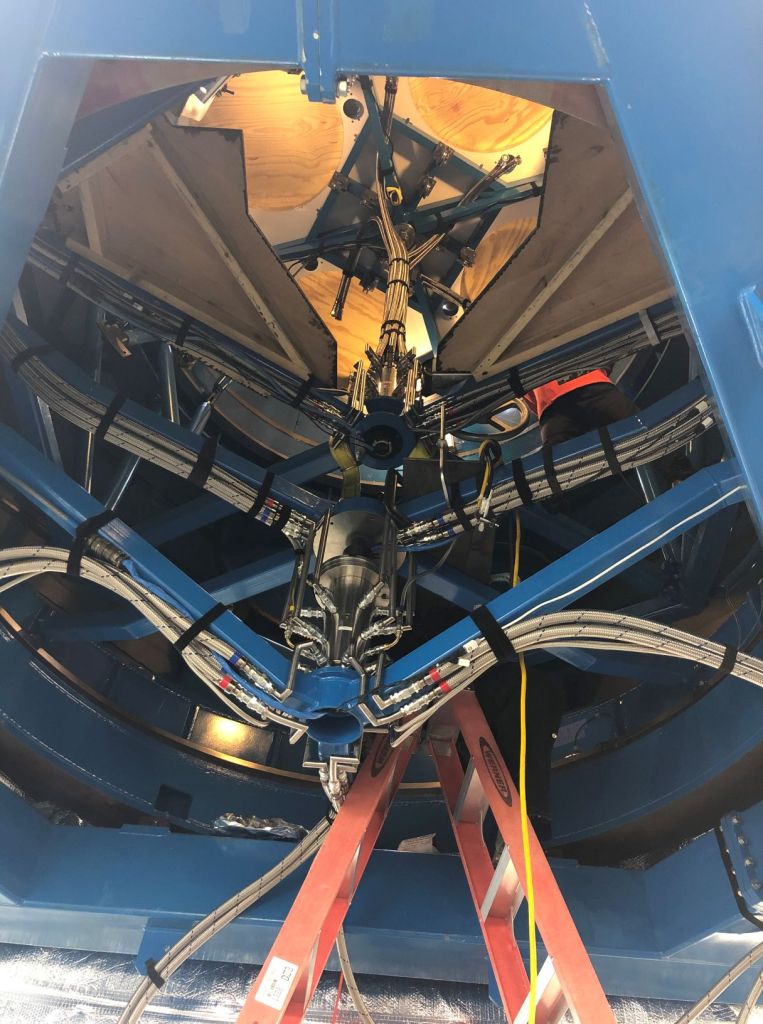
Other fun things: the BICEP Array experiment is installing their experiment (with a fancy new 3-axis bearing).

Remember when I said yesterday that I had taken a video running around the Dark Sector and given a nice tour… well somehow that microSD card got corrupted, so I basically just ran around and talked to myself for 20 minutes for nothing! Oh well, plenty of other opportunities to try.
Stay tuned.
 Allen's South Pole Winter-Over 2020 (+)