Weather: This past week we had some poor weather with high winds, which has since cleared up to clear, cold, calm conditions. Currently it’s -63C with 4m/s winds (that’s about -82F with windchills below -100F). The met weather station is currently borked after a software update, but we have the weather data from the top of the SPT building.
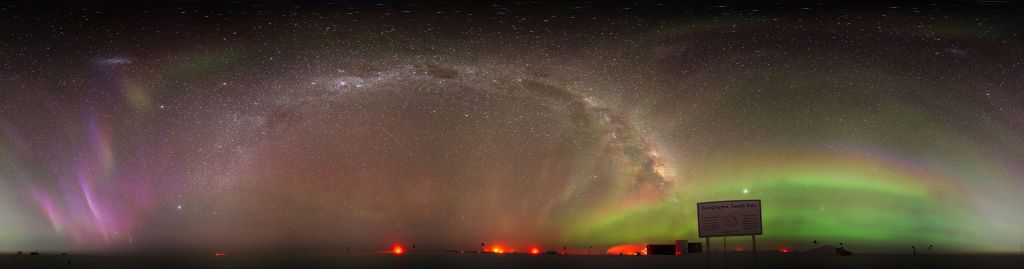
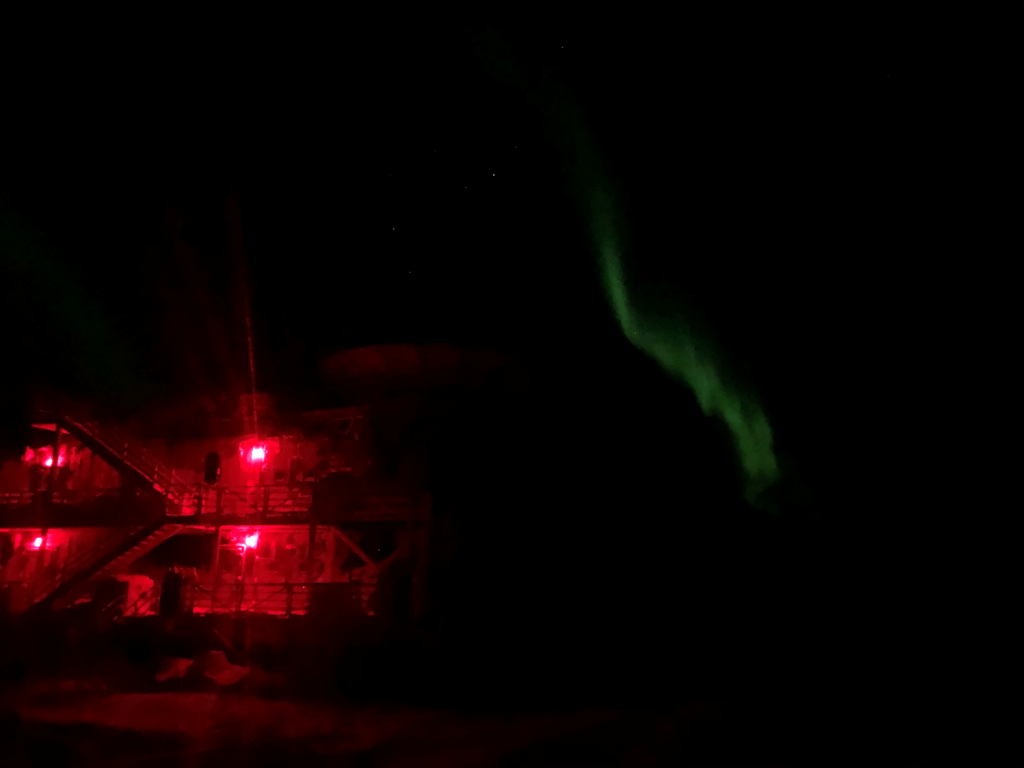
There has been a lot of talk between the photographers with the nice cameras, taking these beautiful, long exposure shots (and also the live-feed cameras which have super-high exposures), and the average Joes like me who use their cell phones for pictures. It’s much darker than you might think, and the smaller aperture cameras like my cell phone cannot capture everything like is seen in the photo above. Similarly the live-feed cameras make the moonlight appear like it’s a sunny summer day! The full moon definitely provides enough light to see where you’re going so you don’t trip over sastrugi, but it’s nothing like the cameras make it look!
Check out my photos below for a more realistic view:

I apologize for the infrequent postings. The internet is now up from 0730 until around noon, which is my ideal work time so I have been putting off the blogging. I’ve also not had many good pictures since the weather has been crappy.
We’ve also been dealing with some power plant issues; we had a few quick brownouts last week which has caused problems for SPT. It’s also caused them to try and figure out the cause of the brownouts which means that they’re doing lots of tests on the generators for which we have decided to park the telescope (so as to not be moving in the case of a power loss).
As far as science goes, I’ve been spending a lot of time analyzing the variability of bright sources in our field maps. These Active Galactic Nuclei, or AGN, can vary greatly in brightness on various timescales because of dynamic processes around the central supermassive black holes of galaxies. Depending on the size of the black hole, you might expect variations to take longer or happen quicker (because light can only propagate at a certain speed, i.e. for very large black holes, you wouldn’t expect very fast changes in brightness). Even the largest of these AGN are still just point sources to us, so we can’t resolve the physical scale, but perhaps some analysis of the variability can give us some more information. Similarly, looking at SPT data and comparing that with other wavelengths can yield even more information about a source. Experiments such as the Fermi gamma ray telescope monitors such sources for ‘flares’ in their brightness, and we’ve just begin to consider correlations and time lags between our data and theirs.

 Allen's South Pole Winter-Over 2020 (+)